
May 2026 Newsletter
Burning Questions from the C-Suite
From a CEO: Can My Right Hand Take Over My Job?
Good question. Some Right Hands eventually move into their CEO’s job, and some never do. I’ve seen many cases where the Right Hand became the obvious replacement for the CEO when the CEO was ready to step away. I’ve also seen numerous situations where the Right Hand never wanted to be the CEO or didn’t have the skills to do the CEO’s job.
Both scenarios are ordinary, so make this kind of succession decision based on the needs of the organization and the capabilities and interests of the two people involved, not by some preconceived notion of how things are “supposed” to be. It all depends on your situation.
But assuming you are thinking about having your Right Hand take over your job, let’s talk about some specifics.
The first point to make is this: Leadership transition is about evaluating whether someone else can get the results you get, not whether they can do things the same way you’re doing them. Your replacement won’t talk like you, act like you, or be you. And that’s totally fine because it’s not necessary that they do.
Handing off your job to the next leader is not about defining the actions so tightly that the person steps in and does exactly what you tell them. It’s about defining the results so clearly that the new leader can create her own pathway to obtaining those results.
Of course, this requires you to clarify what results the CEO is actually supposed to get.
I suggest that CEO results could be broken down into three categories:
Work Management
Reputation Management
Risk Management
Work Management means asking questions such as “Am I getting people to get the right work done in the right way?” or “Am I managing the work in such a way that we are delivering value to our customers?”
It’s about people skills, process management, diligence, dedication, and sometimes technical expertise in your industry.
Reputation Management means asking questions such as “Am I interacting with people in such a way that the company is perceived the way we want it to be?”
Your replacement CEO will need to get results in reputation management, not just work management. It’s not enough to get the right work done in the right way. You also have to interact with employees and customers and investors the right way. How people perceive the organization and the work environment matters as much as what work gets done, and managing that perception is usually a big part of the CEO role.
Reputation management is about interpersonal skills, values, communication style, and communication priorities.
Risk Management is about making the right judgment calls about how to balance competing tensions across the business, across different time horizons, and between external priorities and internal priorities.
Risk management is about business savvy, personal resilience, and the ability to think your way through complexity and nuance. It’s the ability to decide rather than simply recommend or step back.
So in order to find out if your Right Hand can take over your job, ask yourself these things:
What results is the CEO of our organization supposed to be getting in those three areas?
Where would my Right Hand need training to be able to get results in those areas?
Remember to ask if the Right Hand can get the results the CEO role is supposed to deliver, not whether they can become your clone.
Famous Right Hands: Phineas and Ferb
A great Lead/Right Hand dynamic is Phineas and Ferb, from the long-running children’s TV show of the same name. Phineas is clearly the Lead and Visionary. He wakes up every morning with a big plan: build a roller coaster, invent time travel, create a biodome. He’s outward-facing, full of ideas, energetic, and optimistic. He pulls people into motion through excitement and possibility.
Ferb is the Right Hand and Integrator. He says very little, but is constantly translating vision into execution. He builds, calibrates, fixes, stabilizes, and quietly solves problems while Phineas is still enthusiastically pitching the next idea. In EOS language, Phineas creates momentum and Ferb operationalizes it.
Note that Ferb is not merely “helping.” He’s leading. Ferb clearly has authority, technical judgment, and independent decision-making power. Phineas doesn’t have to hover over him asking whether the weld is secure or the launch sequence works. They have tethers, role clarity, and complementary capability. And Ferb is not trying to become Phineas. He’s not competing for the spotlight or forcing himself into the Visionary role. He amplifies the vision by supplying the execution discipline the vision lacks. That’s what an effective Right Hand relationship often looks like. The Lead expands possibilities that the Right Hand then converts into operational reality. And when the two trust each other, the company can build some pretty ridiculous roller coasters.
Sources: Phineas and Ferb: Head to Head, 5 Lessons in Collaboration from Phineas and Ferb, Management Lessons from Phineas and Ferb
Hit reply to this email to tell us what famous Right Hands you’d like to see featured in future newsletters.
News
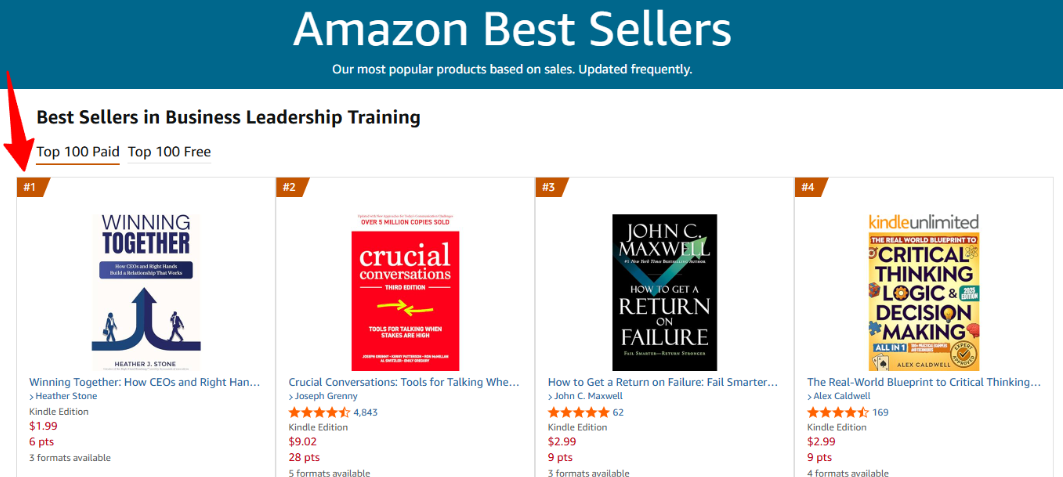
Big news! Winning Together: How CEOs and Right Hands Build a Relationship That Works is now available in print and Kindle formats (audio coming end of June). On release day it made #1 bestseller status on Amazon in all three categories it was published in, thanks to so many of you.
Recommendation
We have updated the Resources section of the Practical PhD website to now include a list of vetted EOS/BOS implementersfrom our Right Hand community. Please reply if you have additional recommendations.
Can We Help?
At Practical PhD, we help companies Get the Right Hand Right so they're ready for top leadership transition in 1–3 years:
Find and hire a Right Hand
Onboard a new Right Hand
Teach an aspiring Right Hand the job
Performance-manage a struggling Right Hand
Create a phased leadership succession plan
Click here to book a free consult.