
April 2026 Newsletter
Burning Questions from the C-Suite
From a Right Hand: How Do I Align Employees with My CEO's Vision?
Alignment at scale is about infrastructure.
Alignment between two people is about communication—did you say it in such a way I could hear it? Are we speaking the same language? But when it comes to getting tens or hundreds of people aligned, it is no longer about words. It’s about whether you have systems and programs to produce the right behavior. In other words, infrastructure.
Right Hands excel at putting infrastructure in place. You’re the ones people turn to for organized ways to get the team working together. However, there are three parts of infrastructure, and I often see Right Hands paying attention to two parts and ignoring one.
The three parts of infrastructure are:
Process infrastructure
Technology infrastructure
People infrastructure
Process infrastructure seems obvious. We make checklists, policies, and standard operating procedures. We figure out organized and efficient ways for the work to get done, and have everybody follow a standard way of doing things. Process is an important part of scalability. It’s what allows an operation to run without depending on the heroic moves of just a few people.
Technology infrastructure is tools, applications, ERP software, integrated platforms, AI assistants—all the digital stuff we implement to make the business more accurate and efficient. We move from manual ways of doing things to more automated ways. We move from storing data on paper to storing it in a central database. Technology has tremendous power, and it is definitely part of infrastructure.
When you're searching for scalability, you need people infrastructure just as much as you need process infrastructure or technology infrastructure. I don’t mean just getting the right people in the right seats. Right seats are important, but that phrase describes an outcome, not an infrastructure.
People infrastructure is about HOW you get the right people in the right seats, and HOW you get them to stay there and thrive. It’s systems and programs for how the organization hires, trains, manages, and develops people. A structured way to handle communication up and down the org chart. A standard way to handle performance reviews, allocation of work, org charts, job titles, and compensation. A system for training managers, developing careers, and planning for succession.
It’s ironic that most CEOs and Right Hands are very comfortable putting systems in place for how we serve customers. We have strong processes to make sure we’re delivering quality and meeting expectations. But if you ask what we have in place to make sure they’re managing employees effectively, CEOs start hemming and hawing and talking about not wanting to be too rigid and “corporate.” They don’t want to stifle individuality or creativity.
So many leaders seem to think that a systematic approach to people management will lead to bad culture and mistreatment of others. What’s that all about?! Do you really believe that if you had better processes and programs and training that managers would do a WORSE job of helping the individual employees who work for them?
Sure, any system taken to the extreme can squeeze out the humanity and joy. So don’t do that. Don’t build stupid systems. Build good ones.
Without structure, you get wide variance. Some employees are managed well, and some are managed poorly. Some people see their careers developed with all kinds of opportunities, and some are never considered for opportunities.
You probably have the basics of people structure, maybe even an HR coordinator. But have you been as systematic and intentional about people infrastructure as you have been about process or technology? I bet you have teams running technology adoption projects, and experts tasked with process documentation. But does every leader go through a management development program? Do you have a systematic way to train, develop, and coach all employees? Do you have ways to make sure strategy gets communicated all through the organization?
If you’re feeling stress around the people side of your business—if people are not delivering or feeling unpredictable—it’s possible they are unpredictable because you haven’t put structure in place to help them be consistent.
If you’re a Right Hand tasked with building infrastructure, don't ignore one third of the scalability equation.
Famous Right Hands
Frodo and Sam from The Lord of the Rings are one of the closest partnerships in modern storytelling. They are not equals in role, but they are deeply aligned in purpose. Frodo carries the mission. Sam commits himself to Frodo. What works about their dynamic is the clarity and the trust between them. Sam is not trying to be Frodo, and Frodo is not trying to do it alone. Sam stays grounded, focused on what needs to happen next. He manages the reality of the journey while Frodo carries the weight of it.
The defining moment comes near the end of the movie, when Frodo can no longer continue under the weight of the ring. Sam doesn’t try to take it from him. He understands that he can’t. The burden is not transferable. Instead, he says, “I can’t carry it for you, but I can carry you.” That line captures the essence of the Right Hand role. Sam knows where the line is between what is his to take on and what is not. And within that boundary, he does everything he possibly can. He literally lifts Frodo. He absorbs the physical strain. He carries the weight around the weight. It’s not symbolic. It’s practical. It’s what allows the mission to continue when it otherwise would have ended.
That’s the dynamic between a CEO and a Right Hand. The CEO is carrying something that cannot be delegated: vision, risk, financial accountability. That’s the ring. The Right Hand will never own that the way the CEO will. But they can carry everything around it. They can create structure, reduce friction, anticipate needs, and step in when the CEO is at capacity. They can make sure the CEO has the space and stability to keep moving forward. When this works, it doesn’t blur roles; it sharpens them. One person carries the mission. The other makes it possible to finish it.
Links: LotR, Tolkeingateway, Stephencwinter, and the books!
News
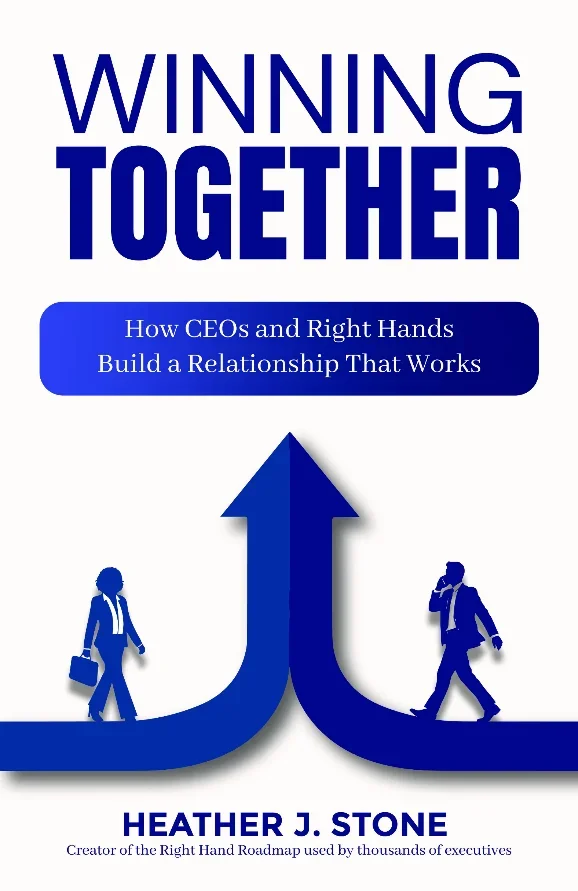
Here’s the cover for the new book! We’ll let you know when it’s available for purchase.
We are still vetting the many EOS implementers recommended by folks in our Right Hand community, so give us until next month to get the final list to you. (If you have implementers you love, please hit reply and tell us. We’re still accepting recommendations.)
Recommendation
Speaking of people infrastructure (per the Q&A above), take a look at this book on the fundamental behaviors needed for people management. It’s from the folks who run the Manager Tools website and podcast library. I have appreciated their podcasts over the years, especially their Feedback part 2 and part 3, which explains a practical and easy model for telling employees the good and bad about their performance. I bought the book to get a written version of this feedback model and see the bigger system that it is embedded in. I’m not finished reading, but so far the book is very practical and specific on how managers can get results from their teams.
Quote
“Here’s what I’ve learned as a Fractional COO, and from walking dozens of owners through the fire:
You will never have the time to hire.
You have to hire to get your time back. Hiring isn’t a detour. It’s the main road forward.”
Can We Help?
At Practical PhD, we help companies Get the Right Hand Right so they're ready for top leadership transition in 1–3 years:
Find and hire a Right Hand
Onboard a new Right Hand
Teach an aspiring Right Hand the job
Performance-manage a struggling Right Hand
Create a phased leadership succession plan
Click here to book a free consult.